Posts Tagged ‘Zinc Die Castings’

For the Easier Zinc Die Casting Job. Die casting is the process used to produce metal works by injecting molten metals such as tin, zinc or lead into molds, called dies. When a die uses a metal like zinc, the die can be called zinc die casting tooling.

  • A zinc die casting tooling is usually made of alloy tool steels composed of two sections. The first half is a fixed die half, where the molten metal is usually injected. The second half is the ejector die half, which makes removing the metal once it has solidified much easier. This die has a locking pin so you can secure to the two halves. Other available dies have cores or slides that allow the user to make shapes into the casting.
  • Zinc die casting tooling is recommended because it can withstand high temperatures and cast-to-print shapes, which will save you a lot of hassle in the overall die casting process.
  • After die casting, if there are excess parts, a tool called a “trim die” can be used to take off the excess zinc around the produced die. This way, the object will be produced to fit exactly the measurements that it is intended for. You will get exactly the metal part you want with this.

  • alt="Zinc Die Casting Company" width="468" height="60" />

    To get a price for zinc die casting parts or zinc die casting tooling,
    call toll free 800-524-8083 and ask for sales. Or email us at

    sales@diecastingzinc.com
    for a fast response on a price quote.

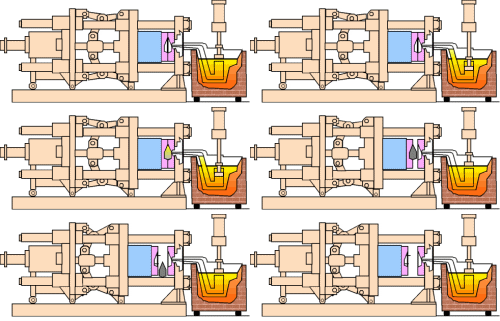
  • How Zinc Die Casting Works. Die casting may either be a cold chamber or a hot chamber process. The zinc die casting process is a hot chamber process, since the metal zinc has a low melting point and high melt fluidity. In fact, zinc is generally held to be the easiest alloy to cast in a die, since it is fast to fill, quick to cool and to eject, all in a short period of time. So if you were to take up the die casting process, it’s best to choose zinc as your metal.

  • The zinc die casting process is composed of four simple steps. To begin with, the mold must be sprayed with lubricant. This will control the temperature and also make the removal of the casting easier later on. After this, the mold should be closed tightly. Then the molten zinc will be immersed into a hot chamber machine under high pressure. When the die has been completely filled with the zinc, the pressure of about 10-175 MPa must be maintained until the casting is fully solidified. Then the die is opened and the casting will be ejected.
  • The zinc die casting process is used to mass produce small, but precise metal parts such as gears, connector housings or even sink faucets. The objects, though small, are produced with accuracy, quality and detail.

  • alt="Zinc Die Casting Company" width="468" height="60" />

    To get a price for zinc die casting parts or zinc die casting tooling,
    call toll free 800-524-8083 and ask for sales. Or email us at

    sales@diecastingzinc.com
    for a fast response on a price quote.

    What You Should Know About the Zinc Part Types. Due to its ductility and versatility, zinc (especially zinc alloys) has become a primary choice of manufacturers for die casting processes. Zinc parts types that come from zinc die castings are very useful for making new objects in various kinds of industries. Even golfers make use of zinc part types, since majority of golf clubs are produced from zinc die castings. Automobile parts and home hardware parts like lock housings used for security purposes also uses the zinc die casting process. Its durability is tried and tested, the main reason why all these industries make use of zinc part types for die casting. With the help of new and modern technological innovations and equipment, the products of the zinc die casting process give satisfactory results like perfect dimensions, right texture of surface and precise form even if the shapes are complex. Finishing touches for the surface of the zinc die casting include processes like polishing, powder coating, chrome plating and brass coating. Nickel plating can also be done to the zinc die cast. Normally, nickel plating is applied to give the zinc part types a smooth and shiny surface.

    Examples and types of zinc part types include automotive castings, bathroom faucets, handles, hooks, aerospace parts, die-cast cars, die cast toys, fire alarms, faucets, covers, carburetors, heat sinks, kitchen hardware, door handles, decorations, flanges, motorcycle grips, knobs, pumps and pump handles, pump valves, pump rotors, fishing lures, golf club putters, power tools and so much more. All these are manufactured from one common process – zinc die casting.

    The Advantages of Die Casting Using Zinc. The concept of die casting is basically the process of forcing molten metal into mold cavities using high pressure. Most of the die casting done in the market are made from metals that are non-ferrous including but not limited to zinc. However, it is also possible to do die casting with the use of ferrous metals, but this is seldom done. Other non-ferrous metals that are used for die casting are copper, lead, tin, etc. Zinc is a popular metal for die casting due mainly to the zinc alloy’s favorable characteristics and advantages over other materials and processes.

    One advantage of zinc die casting is the metal’s high strength and its hardness. Zinc die castings are famous for their great impact strength compared to other materials. It may not be stronger than steel but stronger than “steel weldment”. Another preferred advantage of zinc die casting is its castability feature. This is due to the fact that zinc has a fluid nature that beats other metals. Likewise, zinc has a longer die life. In zinc die casting, the die life is 1 million shots before the need for replacement occurs. This is 10 times longer that what is found in other materials like aluminum die casting. The possibility of easier parts consolidation in zinc die casting due mainly to its higher fluidity makes it another advantageous feature of the metal. Lastly, zinc is not expensive compared o other metals and therefore the practical choice for many die caste. It is also readily available. More advantages can be found when die casting zinc. Online sites can provide the information readily.

    Die Casting – Different Zinc Parts Types. The Zinc Die Casting has been very popular around the world for a very long time simply because it gives lots of benefits. Additionally, the three methods of Zinc Die Casting make various Zinc Parts Types.

    The first and the oldest Zinc Die Casting method is the customary die casting. This method creates Zinc Die Cast Parts which have the most remarkable fine veneer and maximum tolerance. Die Casting Method is suggested for the creation of tiny to average Zinc Die Cast Parts.

    The second method called Sand Casting is suggested to be used for the creation of big Zinc Die Cast Parts which need unrefined surface.

    The gravity-fed casting is the third method of Zinc Die Casting parts. It is the most common choice that’s why it is mostly used for the creation of Zinc Parts Types in any sizes.

    Nowadays, many industries have been using Zinc Parts Types out of Zinc Die Castings. At times, golf clubs and zinc automotive parts are made with the use of zinc die casting method in addition to zinc home hardware parts like zinc lock cases which are used for security system.

    Here is a list of the few Zinc Parts Types that are used in our everyday lives:

      1. Fishing lures
      2. Golf club putters
      3. Pump valves
      4. Pumps
      5. Pump handles
      6. Pump rotors
      7. Power tools
      8. Zinc door knobs
      9. Kitchen hardware
      10. Frames and cases
      11. Heat sinks
      12. Handles, Door handles
      13. Motorcycle grips
      14. Flanges
      15. Faucets
      16. Fire alarm case
      17. Die-cast toys
      18. Die cast cars
      19. Carburetors
      20. Hooks