Posts Tagged ‘Zinc Die Casting Tooling’
Zinc Die Cast – The Die Cast Tooling Process. If you hear someone say the phrases like “insert dies”, “Zinc Die Casting Molds” or “Zinc Die Casting Dies,” that person is referring to the Zinc Die Casting Tooling. It has various styles, sizes, and forms and it either comes with one cavity or numerous cavities.
Zinc Die Casting Tooling is built of metal tool alloys separated into 2 parts, which are the ejector-die half and the fixed-die half. Newer version of dies may possibly have movable cores, slides or further sections in order to create threads, holes, and other preferred contours. The sprue holes placed in fixed-die half, directs the molten metal through the die until the cavity becomes full. Typically, the ejector-die half is composed of inlets and passageways that guide the molten metal through the cavity. The dies have holes for cooling fluid agent and grease, locking pins for the security of the pair of halves and ejector pins to help eliminate the cast part in the equipment.
Every so often, zinc parts require trim tooling. As soon as a zinc part is created by the Zinc Die Casting Tooling machine, the extra zinc surrounding the parts of the zinc will be cleaned by the trim die tool. The die is placed into the trim press wherein the ejector-die half and fixed-die half are put on hydraulic pressure so that it will be easier to sheer and trim the materials all together. With the use of trim dies the production process of zinc part is faster. As a result, at least 15% in the cost of the zinc part is saved.
The Role of Zinc Die Casting Tooling. Zinc parts are produced with the zinc die casting tooling in the zinc die casting machine. The components of the zinc die casting, as well as the zinc dies are alloy tool steels that are divided into two parts. These 2 parts are the ejector die half and the fixed die half, which permit the removal of the castings from the die casting machine. Modern dies may include cores, movable slides or other portions that can produce threads, holes, and shapes as may be required in casting. The sprue holes in fixed die half permit molten metal into the die and fill the cavity. Dies also have the locking pins that serve to secure the two halves. It also includes ejector pins that help in taking out the cast parts and openings for lubricant and coolant.
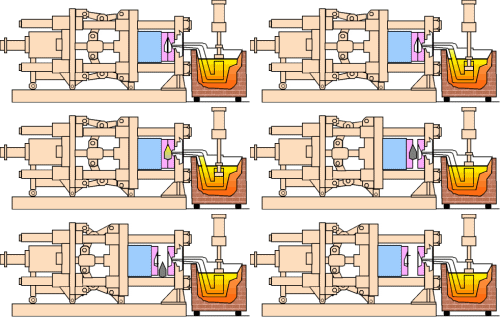
When the machine for die casting shuts off, the 2 die halves will be held together and locked by the hydraulic pressure of the zinc machine. The die parting line is the machine’s surface wherein the meeting and locking of the ejector as well as the fixed halves happens. The total area of the part’s surface being die casted, the pressure and the die parting line’s measurement needed in injecting metal to the cavity’s die manages to determine the machine’s clamping force.
What people refer to as those die casting molds and insert dies made of zinc are what is referred to as zinc die casting tooling. This tooling is available in various styles, shapes, and sizes. It comes in either 1 or more cavities. Zinc die cast tools varies due to cavity inserts as well as trim dies.
Zinc Die Casting Tooling. Also known as zinc die casting dies or zinc die casting molds, zinc die casting tooling is an indispensable equipment in the zinc die casting process. It comes in various shapes, sizes and design but it only has a single purpose. Zinc die cast tooling allows the molten zinc to be shaped by applying pressure and heat.
Zinc die casting tooling consists of solid alloy steels. These alloy steel are usually divided into two sections and are used for the casting of the molten zinc alloy. The first part is the cover half. This half is usually the one that is fixed in a cast. The other one is the ejector die half. This other half is used for the removal of the solidified zinc alloy. It includes pins to keep the two halves together until the zinc solidifies.
Over the years, engineers have created zinc tooling, die casting tooling which consists not only of two sections as mold. Modern zinc die casting tooling may now contain slides and cores. This is because many zinc parts now require certain details such as holes and threads. With slides and cores, such requirement can be applied.
Aside from the pins, hydraulic pressure is applied to the halves to help with the solidification process. Pressure is applied for about 2-15 seconds depending on the size of the zinc die casting tooling. Lubrication is applied to make the separation of the zinc alloy from the casting easier. Added operations are performed in order to trim and polish the product.
Zinc Die Casting Tooling. Zinc die casting tooling is a product of the highly practiced zinc die casting process, a method of casting that has grown immensely popular over the years. Die casting is versatile, with a variety of materials allowable for usage. Zinc alloys are preferred by many zinc die companies because of the many advantages they offer. Compared to other metals and their alloys, zinc alloys are more durable, flexible, and economical.
In order to make zinc die cast tooling, manufacturers must force molten zinc alloys into steel molds, also referred to as dies, through the employment of very high pressure, which will be provided by the die casting machine. The molds or dies are reusable, another reason why many companies prefer to use the die casting process. They can also be designed in order to produce a wide array of complex shapes that are capable of a high level of accuracy and repeatability. The parts made can come out sharply defined, with finishing touches easily achieved if so desired.
Zinc die casting tooling or zinc die cast parts are among the highest volume, mass produced cast parts in the metal-working industry. They are suitable for several applications in the modern world. They can be found in countless commercial and industrial products. Today, the demand for zinc die cast parts is higher than ever; such parts are essential components of a vast range of products, from toys to communication devices to computers to home fixtures to automobiles, and these products can be as simple as a kitchen faucet or as complicated as a connector housing.
Miniature Type of Zinc Castings
Zinc die casting is very popular among those who are in the die casting industry. Zinc is very good die casting material because of its properties. A lot of products come from zinc die casting, including golf clubs, automotive parts and hardware parts. One type of zinc die casting is the miniature zinc casting process. Miniature parts zinc castings are made with the use of a 4-slide die casting mold. The weight of production processes range from a fraction of an ounce to as much as ¾ lbs with sizes from miniscule to 4 x 4 x 1 inch. Miniature zinc casting parts can undergo die casting in a complete range of zinc alloys like Zamak 2, Zamak 3, Zamak 5 and Zamak 7. ZA-8 zinc-aluminum alloys can also be an option. Zamak is another name for Zinc.
The main reason why manufacturers use miniature zinc casting is because miniature zinc parts can undergo faster cycling and can be made on multi-slide hot chamber zinc die casting machines. Miniature zinc die casting machines have proven this new technology as the choice for highly sophisticated miniature zinc casting components. Although the technology of high-precision miniature zinc die casting process is very much alike, the hot chamber zinc die casting process of bigger zinc part types, the former is able to hold higher tolerances, usually with zero draft to “net shares” or “as cast” in faster cycles.
Zinc and ZA8 parts are developed by reducing the metal shrinkage and removing operations of pre-die casting. Automated production of zinc parts can make miniature zinc casting parts and units attain a value of pennies per piece and with tremendous low tooling investments. Plus, the lifespan of your projects can endure longer time when you use miniature zinc and ZA-8 die casting tooling.