What Zinc die Casting is All About

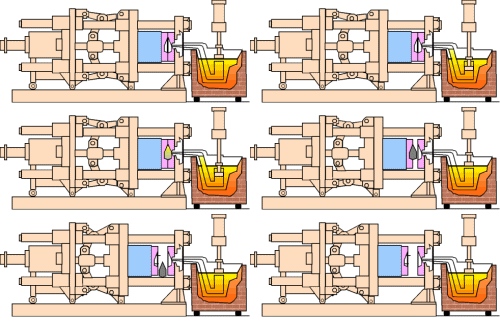
What Zinc die Casting is All About. Zinc die casting is a process where molten metal under high pressure is forced into mold cavities, also called zinc die casting molds, and these are then machined into reusable steel molds called dies or zinc die cast tooling. Most of these zinc die castings tools are produced from nonferrous metals like aluminum, lead, magnesium, zinc, copper and tin-based alloys. Die castings from ferrous metals are also possible.

Recently, some zinc die castings have been replaced by injection-molded plastic parts. Reason is they are cheaper and lighter. Plastic is a practical alternative if only little strength is needed and hardness is not required.

When casting does not require porosity, then the pore-free casting process is preferred. This is similar to the standard process except that before each shot, oxygen is injected into the die. This results in the formation of small dispersed oxides when the molten metal fills the dies. This almost removes gas porosity. It also adds strength. This process uses aluminum, zinc and lead alloys.

Zinc die casting company process forces molten zinc through a heated manifold and then through heated mini-nozzles, which then lead into the molding cavity. This process, called the heated-manifold direct-injection die casting or runner less die casting, has lower cost per part. This is because of the reduction of scrap and energy conservation. Better surface quality is achieved through slower coaling cycles.

The main die casting alloys are copper, lead, zinc, magnesium, aluminum, tin, while specific die casting alloys are Zinc Aluminum, AA380, AA384, AA386, AA390, ZAMAK and AZ91D Magnesium.

Due to its high ductility and impact strength, Zinc is the easiest alloy to cast. It is easily plated and economical for small parts. It also promotes long die life. Aluminum is light and good corrosion resistant. It has good mechanical properties and high thermal and electrical conductivity. Magnesium is the easiest alloy to machine while copper has the highest mechanical properties of alloy die cast. Lead and tin have high density.

Posted in Zinc Die Casting Tooling | Tagged | Leave a comment

Zinc Electrical Parts

Zinc Electrical Parts. A great number of small and medium sized metal parts comprising most electrical and electronic equipment are made of zinc. These zinc die casting parts are popular choices in the production of various electrical and electronic equipment. Zinc parts boast of strength and hardness not always present in parts that are plastic molded, sand casted, permanent mold casted, forged, stamped, and screw machined. Zinc material advantages especially in the electrical industry are resistant to temperature extremes and have superior electrical properties.

These zinc die casting parts are efficient both in terms of cost and functionality. Cost efficiency is one of the zinc material advantages because zinc parts can be manufactured in one single piece of multiple components. This eliminates the need for later assembly or for additional fastening implements. Furthermore, this results in more durable parts that rely more on the strength of its material rather than in the strength of the fastening material used or the way the parts are joined together. The durability of the zinc die casting parts spell their efficiency in terms of their use and function.

Zinc die casting parts also have excellent shielding properties that allows it to function in internal circuits as an electrical ground. These metal parts have high thermal conductivity that makes them fitting choices for electronic connectors as well as small components in consumer electrical and electronics equipment. The added benefit of the zinc die casting parts’ finishing versatility also allows for wear resistance in when used as external parts of various implements. These zinc material advantages make zinc die casting company parts an efficient choice in most electronic and electrical applications.

Posted in Metal Parts, Zinc Parts | Tagged , , | Leave a comment

Different Types of Zinc Die Casting Parts

Different Types of Zinc Die Casting Parts. The zinc die casting process is one that has become extremely popular over the last decade, although it has been around for many years now. The reason for this is simple: the zinc die casting process offers a number of benefits. Moreover, the process can produce different types of zinc die cast parts, and just what these are we will be discussing in this article.

Basically, there are three zinc die casting methods, and they are die casting, sand casting, and gravity-fed casting. Die casting is probably the most popular and the oldest of all three methods. It is also the method that produces zinc die cast parts that have the highest tolerance and the most incredible, fine finish. The process mainly places pressure on the liquid zinc so that the die cast parts end up more detailed than other cast parts. Die casting is recommended for the production of small to medium zinc die cast parts. Sand casting, on the other hand, is recommended for the production of large zinc die cast parts that require coarser surfaces. Compared with die casting, the production costs (both pre and post) of sand casting are higher, but the tooling costs are lower. Finally, gravity-fed casting is considered as an intermediate option. Thus, it is recommended for the production of zinc die cast parts in all sizes. The polish or finish of zinc part die castings is as fine as that of the die casting process; the production costs are lower than those of the sand casting process; and the tooling costs are relatively affordable or reasonable.

Posted in Zinc Parts | Tagged , | Leave a comment

How to Make Zinc Die Casting Parts

How to Make Zinc Die Casting Parts. You have probably heard about zinc cast parts, some of the most important elements that make the metalworking industry more reliable and profitable than ever. Zinc cast parts are made through the practice of the zinc die casting process. Basically, the said process forces molten zinc metal under pressure that is high, right into die casting tooling cavities, in order to form cast parts. This process is also referred to as the die casting process and, in some cases, may use another metal other than zinc. Both ferrous and non-ferrous materials can be used, such as zinc, tin, lead, and magnesium, to name some of them. For purposes of this article, however, zinc as the main material will be discussed.

The zinc die casting process, which is a very tedious one, can produce zinc cast parts that are small to medium in size. As for their appearance, cast parts made from zinc are known to carry intricate, impressive details, as well as delicate and finely textured surfaces. What is most notable about he said process is its consistency as far as the dimensions of the cast parts are concerned.

In order to make zinc die casting parts that are of high quality, zinc part castings need not be expensive. One of the benefits that the metalworking industry appreciates about the process is that it is very economical. Production costs are kept to a minimum because the parts only need the primary equipment. Zinc Die Casting Tooling and screening afterward are rarely required. The process to make zinc die casting parts involves just a few additional things, namely injections, lubricants, and cooling tools.

Posted in Metal Parts, Zinc Die Casting Tooling | Tagged , , | 1 Comment

Zinc, uses and processes

Zinc, uses and processes. Companies who specialize in aluminum cast parts usually also offer zinc die cast parts. Zinc Die Casting is the preferred method for manufacturing small cast parts. The other metals used in casting aside from aluminum and zinc are magnesium, copper, lead, brass, and tin. Other methods aside from the zinc die casting method are the sand cast, the investment cast, the gravity die or permanent mold. These other methods are ideal for different applications of the cast parts. Each casting process has its own pros and cons.

The zinc die casting process is just about the same as for these other metals mentioned here. A mold is prepared from an original. The patterns in the zinc die casting tooling or die casting mold are to be duplicated by the zinc casting metal. To make this process of zinc part castings cost-efficient, several copies are to be made with the one mold. Therefore the mold has to be strong enough to withstand numerous repetitions and still come up with quality detailed products with dimensional accuracy, strength, and other mechanical properties. The metal is melted, and there are different melting points for each metal. The molten metal is then poured or force injected into the mold. As the metal hardens or cures inside its mold, it takes the details and the shape of the mold. The zinc diecast parts are now formed.

These zinc die casting companies in the metalworking industry have their own foundries, machines, and tooling mechanisms. They provide services to a lot of other industries that require metal in their products. Aeronautics, automobile manufacturing, computer and electronics, consumer products, and a lot more modern industries have a use for zinc.

Posted in Die Casting Zinc | Tagged , | Leave a comment