Posts Tagged ‘Die Casting Zinc’

Die Casting Processes with the Use of Zinc Alloy. Die casting is the process by which molten ferrous metal, e.g., zinc, magnesium, copper, lead, tin, aluminum, etc., are molded into cavities and placed under pressure to form. The method of die casting is ideal if the application needed is in large quantity and should be well-detailed and has fine quality. Zinc is a non-ferrous metal that is popularly used for die casting. This is due to the fact that zinc alloys have many characteristics that far exceed other metals. Zinc alloys have high strength and hardness, has high thermal and electrical conductivity, low cost, good finishing characteristics, outstanding fluidity, and excellent corrosion resistance among others.

In the zinc die casting process, two processes are involved, the hot chamber method and the cold chamber method. These two zinc die casting processes make use of various types of metal alloys during the production of parts in the zinc die casting process. The hot chamber method involves the process wherein a steel die is filled with a pool of molten metal, all the time maintaining pressure, until the metal hardens. The second process, the cold chamber method, involves the use of two separate chambers, first to melt, then to hold the melted zinc alloy before it is poured into a shot cylinder and afterwards inject them to the die casting die. Before, the metal alloys used in Zinc die casting processes are tin and lead. The zinc alloy however gained popularity and is now the first choice when it comes to die casting.

Zinc Die Casting Invented by a certain Elisha K. Root, die casting has become a well-known process in the metallurgical industry. Die casting traces back its roots in Connecticut in 1830.

This process is applied in zinc. Same with other metals, the process involves high temperature and intense pressure in order to come up with dies. The zinc die casting process takes place as metal is heated into a high temperature in order to make it malleable. The molten zinc is then placed into mold cavities. Extreme pressure is applied to the metal in order to produce hard and strong dies.

Zinc die cast has become popular to industries where strength, detail and production matter. This process has the ability to produce metal dies that requires great details and consistent outputs.

Of course, die casting cannot be made possible without the use of machines. There are two types of machines that are commonly used for the process. They are the hot-chamber machines and the cold-chamber machines. Both machines allow die casting only on certain types of metals and not on all types. These machines differ not only in the metals that it can process but also in the time it takes to perform the entire die casting procedure. Cold-chamber machines take longer as the transfer of the molten metal needs to be done slowly. The machine usually used in zinc die casting is the hot-chamber machines.

Aside from zinc, other metals that are used in die casting are magnesium, aluminum, lead and tin.

The Process of Hot Chamber Zinc Castings

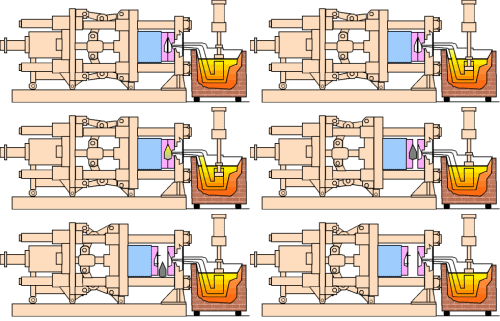
In the hot chamber zinc die casting process, slabs of zinc are liquefied inside a furnace with a temperature of approximately 700-800 degrees Fahrenheit. When melted, the zinc metal stays in the furnace. The gooseneck or shot sleeve is immersed in the hot chamber and the molten zinc is injected into the two die halves being held together by the machine. The two halves of the die casting molds are mounted on the die casting machine and the machine shuts off and clamps the two die halves together. The molten zinc metal is under high pressure until such time that the metal solidifies (approximately less than a minute). Die halves then open up and the part or parts are ejected and taken out either manually or automatically. Finishing works include trimming, tumble deburring, precision machining, painting, anodizing, chrome plating and assembly.

Hot chamber zinc die casting machines are used mainly for zinc, lead, magnesium, copper and other low melting point alloys that do not easily erode metal furnace pots, plungers and cylinders. The injection mechanism of a hot chamber zinc casting machine is soaked in the molten metal bath of a metal holding furnace. The furnace is connected to the machine by a metal feed system called gooseneck or shot sleeve. As the injection cylinder plunger goes up, a port in the cylinder opens, permitting hot molten metal to enter into the cylinder. As the plunger moves downward, it shuts the port and forces molten hot metal into the gooseneck and nozzle into the die cavity. When the metal has already solidified in the die cavity, the plunger is removed, the die opens and the casting is ejected.

A Zinc Die Casting Company. The demand for die casted products in various fields of applications has increased over the past years. A demand for these products entails a demand in the fabrication of machines that produce these items. There are a lot of companies that fabricate and manufacture die casting tooling and machines. A company that caters to the needs of the die casting industry is referred to as a die casting company. The die casting industry therefore, depends on die casting companies for the provision of machines and accessories for the production of their products.

Die casting machines are used for the manufacture of molded or shaped metal parts by melting the metal and injecting it on a set of dies to solidify. Once the metal has solidified, the dies are opened and the molded metal shape is taken out. Another important component in the process of die casting is the die casting tooling, which is actually the molder, or the die itself. The die casting tooling dictates the capacity of the machines, as well as its effectiveness.

A die casting company therefore is dedicated to fabricating the die casting machine, the die casting tooling and other auxiliaries as well. A die casting company also offers finishing works such as deburring, painting, coating, assembly, and burmishing. These are already considered added features of the machines. Different companies worldwide offer a wide range of die casting products which include aluminum and zinc. These two metals are probably the most widely used metals around the world.

Miniature Zinc Parts Everywhere. Aside from the properties of zinc as a perfect die-cast molding material, there are the metal’s other intrinsic and useful characteristics. These are its high resistance to corrosion and to electrical and heat conductivity. Because of these characteristics, die-cast miniature zinc parts are used today in a wide range of applications, especially in telecommunications, computer and electronic and electric applications, automotive and aeronautics, fiber optics, and in a lot more products such as kitchen appliances, consumer products, in mobile phones and laptops and computers, toys and gadgets, screws and bolts and locks and security gadgets. It is used everywhere and its importance to our day-to-day existence cannot be ignored.

The die-casting process of zinc involves a die-mold machine which injects the liquid zinc into the cavities of the mold. A coolant is then applied for the quick solidification of the metal. As the metal cools and solidifies, it acquires the desired shape of the mold. The new product is then taken out or ejected by machine. A mass production of these die cast products is possible. The machines may have very fast cycle times and other features that make it a cost efficient process.

This is the metalworking industry today. It is a far cry and is greatly improved from the first discovery of metals a long time ago. The bonfire was their forge. The products were mere arrow tips for hunting purposes. Copper was their first useful metal. Then the Bronze Age, then the discovery of iron, of steel, and then the industrial revolution that paved the way for the present day metal industry and the possibilities of precision die-cast molding miniature zinc parts.